Ranked and Reckoned: The Forensic Sciences American Courtrooms Trust Most — and Science Trusts Least
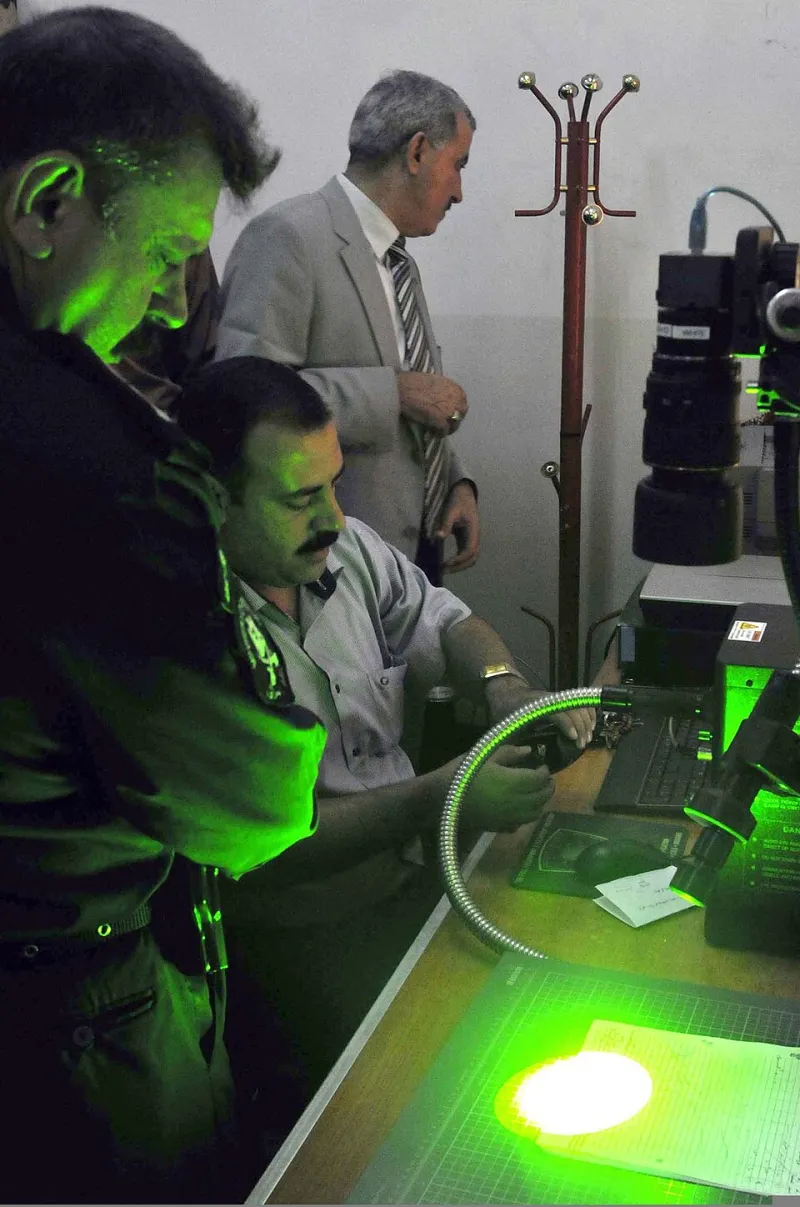
Photo: SGT David Strayer, Public domain, via Wikimedia Commons
In 2009, the National Academy of Sciences published a report that should have redrawn the map of American criminal justice. Strengthening Forensic Science in the United States concluded that many disciplines routinely presented as science in court — hair comparison, bite marks, tool marks, shoe prints — had never been validated to demonstrate they could reliably link a suspect to a crime. The report's central indictment was blunt: "with the exception of nuclear DNA analysis... no forensic method has been rigorously shown to have the capacity to consistently and with a high degree of certainty demonstrate a connection between evidence and a specific individual or source."
Sixteen years later, the courtroom hierarchy of credibility still bears almost no relationship to the scientific one. Below, the major disciplines, ranked from what science actually trusts to what it should never have trusted at all.
1. DNA Analysis — The Gold Standard, With Asterisks
Nuclear DNA profiling remains the only forensic method the NAS report fully endorsed, with random match probabilities that can exceed one in a trillion. But even here, the asterisks matter. Probabilistic genotyping software used in mixed samples operates as a black box, defense experts are routinely denied access to source code, and contamination or low-template samples can produce results far weaker than the confident testimony they generate.
2. Fingerprint Comparison — Reliable, But Not Infallible
Fingerprints are genuinely individual, but the comparison of latent prints lifted from scenes is a human judgment, not a measurement. The FBI's 2004 misidentification of Brandon Mayfield in the Madrid train bombings — based on a print later shown to belong to someone else — exposed how error-prone subjective matching can be. No error rate has ever been established for casework.
3. Firearms and Tool Mark Examination — The Discipline Under Active Reassessment
For a century, ballistics examiners testified they could match a bullet to a specific gun to the exclusion of all others. The 2016 follow-up report by the President's Council of Advisors on Science and Technology found no basis for that claim of uniqueness. Some labs have adjusted their language. Many have not, and juries still hear the old certainty.
4. Digital and Cell-Site Evidence — Precise Numbers, Imprecise Meaning
Location data is real, but its interpretation frequently outruns it. Cell tower pings place a phone within a coverage area measured in miles, yet prosecutors routinely present them as proximity. Courts are slowly tightening admissibility; juries still tend to hear "the phone was at the scene."
5. Hair and Fiber Comparison — Microscopy's Fallen Star
Microscopic hair comparison sent an unknown number of innocent people to prison before DNA exonerations forced a reckoning. The FBI itself acknowledged in 2015 that its hair examiners had overstated evidence in 95 percent of the cases reviewed over two decades. It survives in court mostly as a screening tool, though it still appears in testimony.
6. Arson Investigation — Folklore Dressed as Methodology
The classic arson "indicators" — pour patterns, crazed glass, rapid fire spread — were largely derived from experience and anecdote, much of it traceable to a single discredited 1980s handbook. The 1992 execution of Cameron Todd Willingham in Texas, based on fire analysis now widely considered junk, remains the discipline's permanent indictment.
7. Bite Mark Analysis — The Discipline That Should Not Exist
Bottom of the list, and it is not close. The foundational claim — that human dentition leaves unique, identifiable bite patterns in skin — has never been validated and has been abandoned by its own former practitioners. Every major scientific body to review it has found no basis for individualization. Yet bite mark testimony has contributed to at least a dozen documented wrongful convictions, and it has not been categorically excluded in most jurisdictions.
The Admissibility Gap
Why does junk survive in court? Because the Daubert standard leaves admissibility to judges, many of whom admit whatever has been admitted before. Forensic disciplines enjoy a grandfather clause: decades of courtroom acceptance substitute for validation, and the jury's confidence fills the gap the science leaves open.
The NAS report drew the map in 2009. Courts have mostly declined to follow it. Until admissibility tracks validity — until the witness stand demands what the laboratory requires — the disciplines America trusts most will continue to be the ones it should trust least.