The Chemist, the Cop Shop, and the Cover-Up: Forensic Disasters That Got a Pass
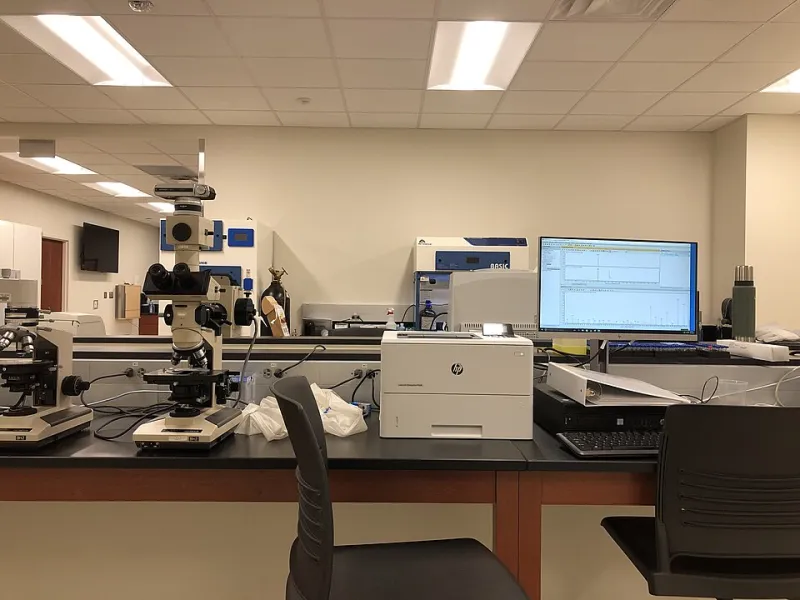
Photo: Mbrickn, CC BY 4.0, via Wikimedia Commons
Every forensic scandal follows the same script. A technician or a lab is exposed. Officials express shock. A task force is convened. Reforms are announced with solemnity. And then, within a few years, the funding disappears, the oversight committee stops meeting, and the next scandal arrives to find the same unlocked doors it left behind.
Here are five disasters that should have rebuilt American forensic science from the foundation up. None did.
Detroit Crime Lab: Thousands of Tests, One Warehouse
In 2008, an internal audit discovered that Detroit's police crime lab was producing drug identification error rates that one reviewer described as 'shocking'—as high as ten percent in some categories, with bulletproof comparisons performed in an unsanitized firearm unit. Roughly 800 drug convictions rested on its work. The lab was shut down that year, the largest municipal crime lab closure in modern memory.
The promised fix: independent accreditation, case reviews, retesting. What happened: the review of affected convictions proceeded at a crawl, and years later, defense attorneys were still petitioning to have the cases reexamined. The building closed. The accountability never fully opened.
Annie Dookhan and the Massachusetts Drug Lab Collapse
When Annie Dookhan of the Hinton State Laboratory Institute admitted in 2012 that she had 'dry-labbed' tens of thousands of drug samples—declaring substances cocaine without testing them, sometimes forging signatures—prosecutors initially dismissed the fallout as manageable. It was not. The scandal ultimately unraveled more than 35,000 convictions, culminating in Supreme Judicial Court decisions in 2017 and 2018 that vacated them in bulk.
The promised fix: systemic oversight of state labs. What happened: Dookhan's lab closed, but the structural conditions that enabled her—prosecution-adjacent labs, no blind testing, productivity quotas—persisted in various forms across the Commonwealth and the country.
Sonja Farak: A Second Massachusetts Catastrophe
Only Massachusetts managed a repeat. Sonja Farak, a chemist at the Amherst drug lab, was using the evidence she was meant to test—consuming cocaine, methamphetamine, and other substances on the job for years while certifying results. Prosecutors, it later emerged in litigation, had withheld evidence about the scope of her addiction, delaying disclosure while defendants sat in prison. In 2018, the state moved to dismiss roughly 8,000 additional convictions.
The promised fix: transparency and disclosure. What happened: the misconduct by prosecutors themselves became the scandal, and the legislature's reform response remains partial at best.
West Virginia State Police Drug Lab
In 2022, the West Virginia State Police revealed that a lab technician had been falsifying drug analyses—skipping the actual scientific work and entering fake results into a database. The state estimated that more than 1,800 cases were tainted. Public defenders scrambled to identify affected clients, some of whom had already pleaded guilty and served time.
The promised fix: case-by-case review. What happened: the review was slow, underfunded, and largely left to understaffed defense attorneys to sort out on their own.
The Houston Crime Lab's DNA Era
Decades before the newer scandals, the Houston Police Department crime lab earned infamy when a 2002 investigation by a local television station found the facility's DNA work so sloppy—contaminated samples, shoddy documentation, untrained analysts—that an innocent man, Josiah Sutton, was freed after four years in prison. An independent audit found problems in nearly every section of the lab.
The promised fix: a nationally recognized overhaul. What happened: Houston genuinely rebuilt its lab and remains a partial success story—which is precisely the point. Reform is possible. It just rarely happens without a television crew forcing the issue.
Why the Pattern Persists
The common thread is structural: most American crime labs answer to police departments or prosecutors rather than independent scientific authorities. Accreditation is voluntary in many states. When a lab fails, the institution that benefited from its errors is the same institution deciding how much to review and disclose. Until forensic science is governed like science—independent, transparent, and adversarially tested—the scandals will keep arriving on schedule, and the reforms will keep evaporating behind them.