The Second Autopsy: Inside the Legal Gauntlet of America's Exhumation Movement
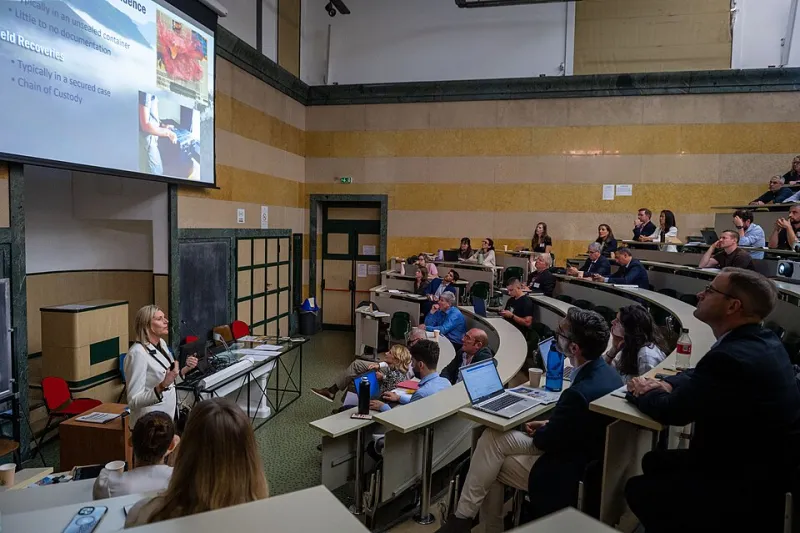
Photo: U.S. Air Force photo by Senior Airman Kathy Duran, Public domain, via Wikimedia Commons
Forensic anthropology has reached a point where a skeleton can testify. Bone trauma patterns, soil chemistry, trace DNA preserved in root fragments — the grave, it turns out, keeps better records than many courtrooms. And over the past decade, a quiet movement has formed around that premise: innocence organizations, university forensic science departments, and families of the convicted are increasingly petitioning courts to exhume bodies and re-examine physical evidence that was interpreted — or never examined at all — by the science of another era.
The petitions succeed often enough to matter. They fail often enough to break hearts. Understanding why requires walking through the legal gauntlet itself.
Why Exhume at All?
The exhumation docket is driven by several converging forces. DNA analysis can now extract usable profiles from remains decades old. Autopsy practices have changed dramatically — injuries once attributed to blunt force by untrained coroners are now recognized as consistent with accident, and vice versa. And in a disturbing number of historical cases, the original autopsy was performed by a coroner with no medical training at all, a practice still legal in a handful of American counties.
For families of deceased defendants, exhumation may be the only remaining avenue of proof. A dead person cannot be exonerated by a confession recanted or a witness recanting; only the physical evidence can speak.
One Case, From Petition to Ruling
Consider the arc of a representative case — a composite drawn from the well-documented pattern in published rulings. A man convicted of murder in the 1980s, largely on testimony placing the victim's injuries as defensive wounds, dies in prison insisting on innocence. His sister, working with an innocence organization, petitions the court for exhumation, arguing that modern forensic pathology could determine whether the fatal injuries were self-inflicted in the manner the defense always claimed.
The petition faces immediate hurdles. Under most state statutes, next of kin have a property-like interest in remains, but that interest collides with the state's interest in the finality of judgments. Courts weigh the strength of the proposed scientific evidence, the likelihood it could change the legal outcome, and the passage of time. Families typically bear the cost — tens of thousands of dollars in exhumation, transportation, and independent autopsy fees — with no guarantee the results will be admissible.
In the representative case, the court grants the petition, citing the specificity of the proposed anthropological analysis. The exhumation proceeds at a rural cemetery at dawn, attended by a forensic anthropologist, a court representative, and the family. The second autopsy finds fracture patterns inconsistent with the state's trial theory. The ruling does not overturn the conviction — posthumous relief is rare and procedurally treacherous — but it establishes, in a court record, that the forensic foundation of the verdict was wrong. For the family, that record is its own form of verdict.
Who Gets Dug Up, and Who Doesn't
The disparity in outcomes is stark. Petitions backed by established innocence organizations, university partners, and named forensic experts fare far better than pro se filings by grieving relatives. Geography matters: states with post-conviction DNA statutes that expressly cover exhumed remains create clearer pathways than states where every petition is a novel legal argument. And race and class track the entire process — families with resources can fund independent pathology; families without cannot.
Courts have also denied petitions on grounds that trouble reformers: that the convicted person is deceased and therefore no remedy can benefit them; that the evidence, even if favorable, would not technically change the legal judgment; that dignity of the deceased outweighs the dignity of the truth.
What Reform Should Look Like
A handful of jurisdictions have begun building better frameworks — statutes allowing next-of-kin petitions for posthumous forensic review when new methods exist, court-appointed expert panels to screen petitions, and state funding for indigent families. The model deserves expansion. If the justice system's legitimacy rests on the accuracy of its verdicts, then it cannot credibly refuse to examine the one witness — the body itself — that never lies, forgets, or dies.
The grave has waited this long. The least the courts can do is listen to it.