Seventy Cases Before Lunch: A Day Inside the Life of America's Vanishing Public Defenders
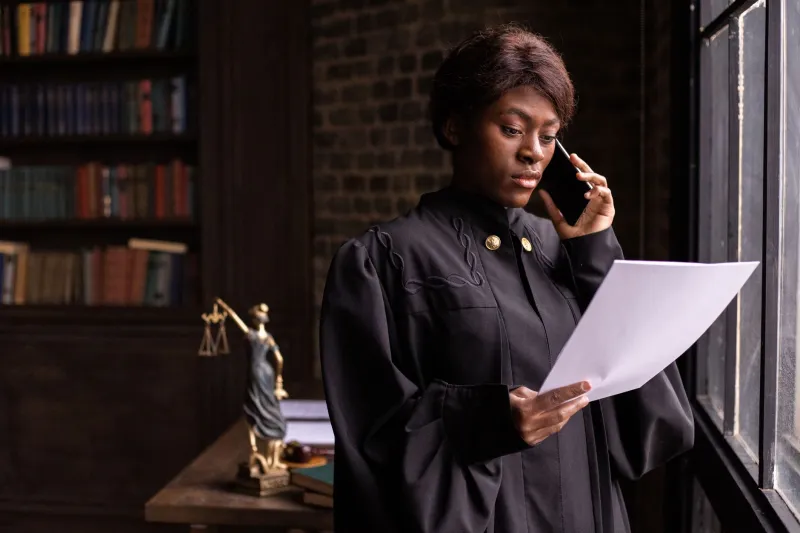
Somewhere in a county courthouse in the American South, a public defender is reviewing a client file for the first time. The arraignment is in forty minutes. The client has been in pretrial detention for six weeks. The defender has 112 other active cases. She has not slept more than five hours. She will meet her client for the first time in a hallway outside the courtroom, speak with him for perhaps eight minutes, and then stand before a judge on his behalf.
This is not an exceptional morning. This is Tuesday.
The Sixth Amendment to the United States Constitution guarantees every person accused of a crime the right to counsel. The Supreme Court's 1963 ruling in Gideon v. Wainwright extended that guarantee to state criminal proceedings, establishing as a matter of constitutional law that the government must provide an attorney to any defendant who cannot afford one. What the Court did not do—what sixty years of subsequent jurisprudence has conspicuously avoided doing—is define what meaningful representation actually requires, or mandate the resources necessary to provide it.
The result is a public defense system that exists in name and fails in practice, in ways that are thoroughly documented, widely acknowledged, and almost entirely unaddressed.
The Arithmetic of Injustice
The American Bar Association recommends that public defenders carry no more than 150 felony cases or 400 misdemeanor cases per year. These figures represent the outer boundary of what a single attorney can manage while providing constitutionally adequate representation. In practice, caseloads in many jurisdictions exceed these limits by multiples that would be considered farcical if they were not so consequential.
A 2022 report by the Brennan Center for Justice found public defenders in some Florida counties carrying more than 400 felony cases annually. In Missouri, a legislative audit found caseloads in some offices exceeding 800 cases per attorney per year. In Louisiana, which has historically operated one of the most underfunded public defense systems in the country, individual defenders have reported caseloads that made meaningful preparation for any single case functionally impossible.
The defenders interviewed for this report described caseloads not as professional challenges but as ethical crises. "There is no version of my day where I am doing this job the way it is supposed to be done," said one felony defender in a mid-sized Midwestern city, who asked not to be identified by name. "I am managing cases. I am not defending people. There is a difference, and I know it every single day."
The Plea Machine
The most direct consequence of unsustainable caseloads is the transformation of public defenders from adversarial advocates into processors of guilty pleas. When a defender cannot investigate a case, cannot retain expert witnesses, cannot file the motions that might suppress illegally obtained evidence, and cannot spend more than a few minutes with a client before a court appearance, the path of least resistance—and frequently the only available path—is a negotiated plea.
This is not a secret. It is a structural feature. Prosecutors know that overloaded public defenders cannot mount serious challenges to most cases, which shifts the leverage in plea negotiations decisively toward the government. A defendant who might prevail at trial—or whose case might be weakened by a competent motion to suppress—instead accepts a plea because their attorney lacks the time to explore those possibilities, and because the risk of a longer sentence after a trial conviction creates rational pressure to accept whatever is offered.
"I have had clients tell me they were innocent," said a public defender with twelve years of experience in a large urban office on the East Coast. "And I believed them. And I still had to explain to them that going to trial with me, given everything I couldn't do to prepare, was a worse bet than taking the plea. That is the most demoralizing conversation a lawyer can have. I've had it dozens of times."
The guilty plea system is not inherently unjust. But it functions justly only when both parties to the negotiation have genuine leverage—when the defendant's attorney is capable of mounting a defense that the prosecution has reason to fear. When that capacity is absent, the plea is not a negotiation. It is a surrender.
The Cost of Staying
Public defense is among the lowest-compensated areas of legal practice. Entry-level public defenders in many jurisdictions earn salaries in the low-to-mid forties—less than many paralegal positions at private firms, and far less than the starting salaries available at corporate law practices. The financial calculus for a law school graduate carrying six-figure student debt is brutal, and the attrition rate reflects it.
But the defenders who remain longest in the profession describe costs that are not primarily financial. The clinical literature on public defense identifies high rates of secondary traumatic stress, compassion fatigue, and moral injury among public defenders—the particular psychological toll of being compelled by systemic constraints to act in ways that conflict with one's professional and ethical values.
"You become very good at not thinking about individual cases," said one defender who has worked in a rural county office for nine years. "You have to. If you let yourself actually sit with what you couldn't do for every person, you would not be able to function. So you develop a kind of professional numbness. And then one day you realize you don't know when the numbness became permanent."
Turnover in public defense offices is high. Institutional knowledge is constantly being lost. Supervisors spend time training new attorneys who will leave within two or three years, then repeat the cycle. The clients—who have no choice in the matter—absorb the consequences of this churn in the form of attorneys who are learning on their cases and leaving before they accumulate the experience to do the job well.
What Reform Would Require
The solutions to the public defense crisis are not technically complicated. They require money. Mandatory caseload caps with enforcement mechanisms. Competitive compensation structures that allow public defense offices to retain experienced attorneys. Dedicated funding streams, at the state and federal level, that are insulated from the political pressures that make criminal defense spending an easy target for budget cuts.
Several states have made incremental progress. New York enacted legislation in 2017 establishing state funding for public defense services and mandating caseload standards. Oregon has pursued similar reforms. But the scale of the problem exceeds what individual state initiatives have so far addressed, and the federal government has declined to establish a national floor for public defense funding or standards.
What persists, in the absence of structural reform, is a system in which the quality of criminal defense a person receives is determined almost entirely by their ability to pay for it. The Constitution says otherwise. The courthouse, on most days, does not notice.