Ninety Seconds of Negotiation: What Actually Happens in the Room Where American Justice Is Decided
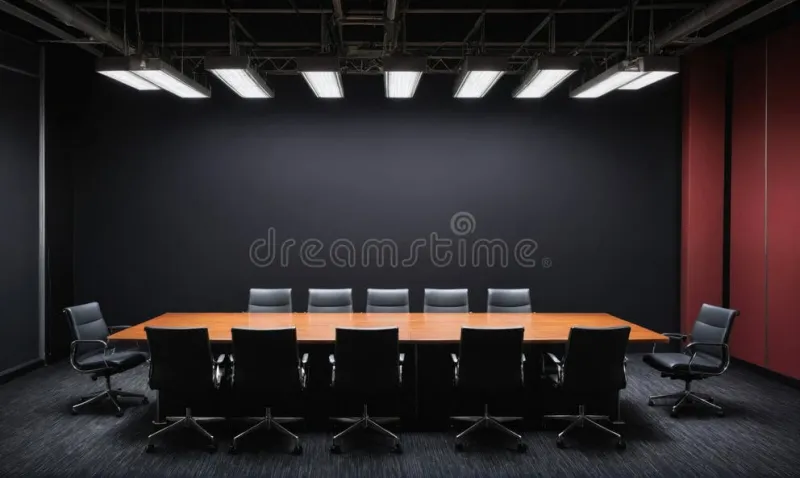
Photo: empty courthouse conference room table chairs fluorescent light, via thumbs.dreamstime.com
There is no gavel. No jury box fills. No cameras roll. The room where the overwhelming majority of American criminal cases actually end is a windowless conference room adjacent to the courtroom, furnished with a folding table and a stack of form plea agreements. The entire proceeding — offer, deliberation, acceptance — often takes less time than a traffic stop.
To understand what American justice has become, you have to watch one deal being made.
The Case of State v. D.M.
Consider a composite drawn from court records and defense counsel interviews: a 34-year-old warehouse worker, no prior record, charged with felony possession with intent to distribute after a traffic stop yielded a quantity of pills consistent with dealing rather than personal use. The prosecution's offer: five years, suspended after 18 months, in exchange for a guilty plea. The trial exposure: a mandatory minimum that, given the weight involved, could reach a decade.
His attorney — carrying, by her own account, 140 open felony files — had spent roughly 40 minutes on the case before the plea conference. The state had spent less. The lab report confirming the substance would take another six weeks to arrive. The offer was made before the science did.
What Gets Weighed
What happens at the plea table is not a weighing of evidence. It is a weighing of risk, and the parties weigh different risks.
The prosecutor weighs conviction probability and office policy. If the case is weak, the offer is generous; if strong, it is punitive — and the difference between those two offers tells you exactly how confident the state is, which is information the defense is meant to decode. The defense attorney weighs trial exposure against her own caseload, and against the professional hazard of taking a case to trial and losing. The defendant weighs the certain, bounded pain of the deal against the catastrophic, unbounded pain of losing at trial — plus the reality that a conviction after trial typically draws a longer sentence than the same conviction by plea, a penalty structure the Supreme Court blessed in Bordenkircher v. Hayes nearly fifty years ago.
What almost no one weighs is guilt. The system's architecture does not ask for it.
What Gets Waived
The plea agreement D.M. signed waived, in a single signature: the right to a jury trial, the right to confront witnesses, the right against self-incrimination, the right to appeal most issues, and any future challenge to how the evidence was collected. The suppression motion his attorney had flagged — the traffic stop's legality was genuinely questionable — died unsigned. Litigating it would take months. The offer would expire in nine days.
This is the bargain's quiet genius: it converts every constitutional protection into a negotiable asset, and then prices the defendant's poverty and fear into the exchange rate. A person with resources litigates the stop. A person without them signs.
The Unwatched Proceeding
Trials get transcripts, juries, and appellate review. Plea conferences get a form, a judge's rote recitation of waiver rights, and a defendant answering "yes, sir" into a microphone he may not fully understand. When pleas go wrong — coerced, uninformed, factually baseless — the record is usually too thin to prove it.
D.M. served his 18 months. The lab report, when it finally arrived, confirmed the pills were what the state said they were. In his case, the shortcut cost accuracy nothing. But the system cannot know that in advance, and it does not check afterward. It simply closed the file.
A country that claims to prize trials above all has built a justice system that almost never holds one. Until we treat the plea bargain with the same scrutiny we reserve for the trial — recording it, staffing it, reviewing it — the real court of America will remain a folding table and ninety seconds of arithmetic.