Twelve Chairs, One Closed Door: The Case for Letting Cameras Into the Deliberation Room
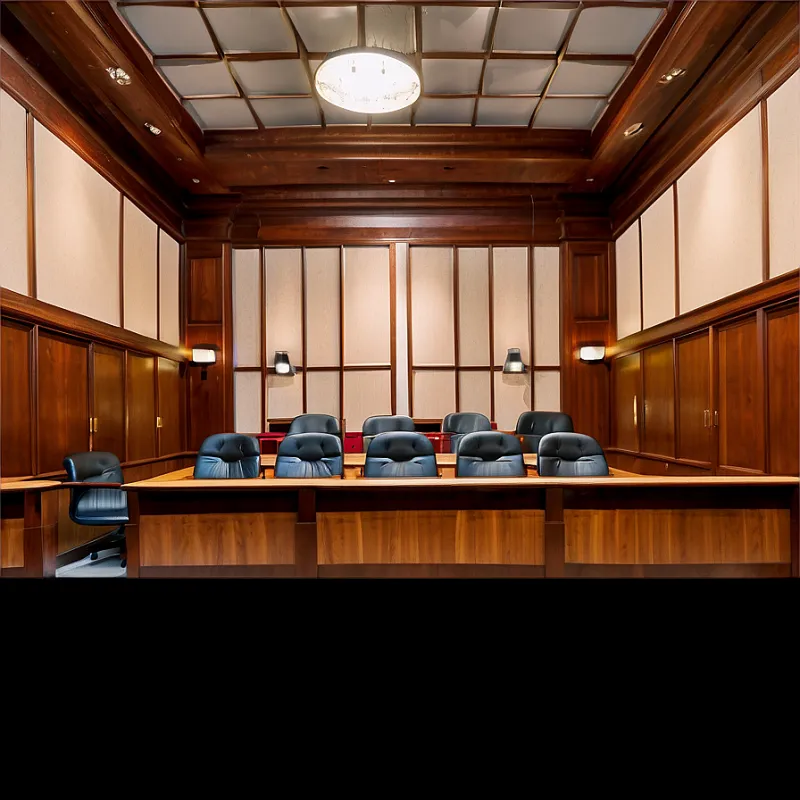
Photo: empty jury deliberation room table chairs courtroom, via pngpix.com
Here is a paradox worth sitting with: the American criminal trial is filmed, transcribed, and archived at every stage — opening statements, witness examination, closing arguments, even sentencing in many federal courtrooms. Then twelve citizens file into a small room, close the door, and decide the outcome. And from that moment until the verdict, the most consequential deliberation in the process vanishes into a void no court, no journalist, no appellate judge can ever penetrate.
We accept this because we have always accepted it. But the justifications for absolute deliberation secrecy deserve scrutiny — and, we argue, a modest, reversible experiment in reform.
What the Darkness Hides
The near-absolute secrecy of deliberations is protected by the federal rule against admitting juror testimony to impeach a verdict, a doctrine dating to the 19th century and hardened by the Supreme Court's 2017 decision in Peña-Rodriguez v. Colorado, which carved out only a narrow exception for racial bias. Outside that exception, what happens behind the closed door stays behind it.
And what happens behind it, we occasionally learn, is troubling. The rare leaks and breaches that surface are instructive precisely because they are rare. Deliberation notes and juror accounts have, in documented cases, revealed verdicts driven by coin flips, by jurors bullied into submission, by prosecutors' arguments misstated and never corrected because the jurors who doubted them were shouted down. In one widely reported case, an exoneration followed the discovery that jurors had convicted without ever viewing key video evidence they believed they had seen. Appellate courts know these failures occur; they simply have no mechanism to find them.
The Case for Secrecy — Taken Seriously
The counterarguments are genuine, and honesty requires weighing them. Deliberation candor matters: jurors must be able to voice prejudice, doubt, and half-formed thoughts without fear that their words become exhibits. Secrecy also shields jurors from intimidation, from reprisal in high-profile cases, and from the chilling effect of knowing a recording might be broadcast. There is real historical weight here — post-trial harassment of jurors in civil rights era cases is a shameful chapter that privacy rules partly answer.
But notice that most of these concerns argue against public dissemination, not against record-keeping. A sealed recording, accessible only upon a showing of suspected misconduct, reviewed in camera by a judge, protects candor while eliminating the void. We do not require that grand jury proceedings be broadcast to insist they be documented.
A Modest Pilot Proposal
We propose something narrow. In a small number of volunteer jurisdictions, felony trials would be selected for a pilot program in which deliberations are audio-recorded. The recordings would be sealed by default. Access would require a sworn allegation of specific misconduct — a coin-flip verdict, evidence never reviewed, a juror's undisclosed threat — and a judge would review the recording in camera, unsealing only the relevant portions. Recordings would be destroyed after the appeals window absent a preserved allegation. Jurors would consent in advance, with full disclosure of the process.
This is not sunlight-as-spectacle. It is sunlight-as-audit — the same logic that governs cockpit voice recorders: we hope never to listen, but we refuse to be blind when something goes wrong.
The Verdict We Can't Verify
A criminal verdict is the state's most serious act. We record confessions, interrogations, and testimony precisely because we know human processes fail. It is strange, then, that the single human process we trust most blindly — twelve strangers in a closed room — is the one we document least. A pilot program costs little, risks little, and could catch the rare but catastrophic deliberation failures that, today, surface only by accident.
The closed door served a purpose once. It should no longer be absolute. Justice deserves a record.