Twenty-Three Strangers, One Secret Vote: How America Indicts on Autopilot
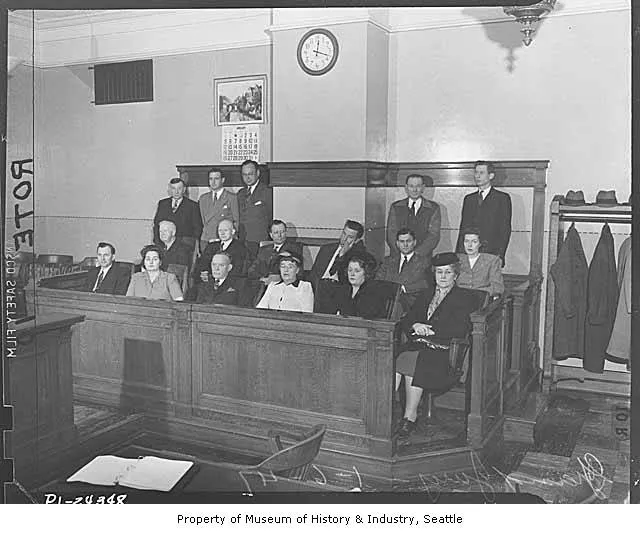
Photo: IMLS Digital Collections & Content, CC BY 2.0, via Wikimedia Commons
There is a running joke in American law schools, usually attributed to a New York judge: a district attorney could persuade a grand jury to indict a ham sandwich. The joke has aged poorly—not because it became false, but because it stopped being funny. The grand jury is not a check on prosecutorial power. It is a rubber stamp with a colonial costume.
A Founding Safeguard Gone Hollow
The Fifth Amendment requires a grand jury indictment for federal felony charges, and the Framers meant it as a shield—a body of citizens standing between the state and the accused, blocking prosecutions that lacked community support. That was the theory. The practice, in the modern federal system, is something else entirely: prosecutors present what they choose, defense counsel is barred from the room, the judge is absent, the record is sealed, and the jurors hear only the government's side of the story.
The result is a conviction rate for the charging stage that would embarrass any actual tribunal. More than 99 percent of federal cases presented to a grand jury end in an indictment. Jurors decline to indict so rarely that a 'no-bill' is newsworthy, a curiosity, an anomaly demanding explanation rather than an exercise of judgment.
The Weapon Nobody Talks About
Defenders of the system argue that the grand jury's near-perfect indictment rate merely reflects careful prosecutorial screening—of course prosecutors only charge cases with evidence. But this argument collapses under its own logic. If prosecutors are already filtering rigorously before presentation, the grand jury adds nothing. It is a redundant ceremony. And if prosecutors are not filtering rigorously, then the body charged with checking them is failing at the only job it has.
Worse than redundancy is weaponization. The grand jury's secrecy provisions—rules that make its proceedings immune from public scrutiny and its witnesses gagged—give prosecutors extraordinary leverage. A subpoena signed by a grand jury compels testimony and documents without any showing of probable cause to a neutral judge. Targets of investigation can be interrogated without counsel present, under oath, in a room they cannot refuse to enter. High-profile federal investigations have used this machinery not to charge crimes but to generate headlines, leak-sourced coverage, and political pressure.
The Cases That Exposed the Curtain
The asymmetry is starkest when the system declines to use it. When prosecutors want an indictment, they get one virtually every time. When the interests of the state or its officers are at stake, the same prosecutors who cannot lose can suddenly not win—presenting weakened cases, calling few witnesses, and letting friendly jurors no-bill police shootings or official misconduct behind closed doors. The public learns the outcome from a press release. The evidence, the testimony, the deliberation: none of it is ever seen.
What Reform Should Look Like
Abolition is one honest option; the Constitution could be amended, and several states already use preliminary hearings instead, where defense counsel appears and a judge finds probable cause on the record. Short of that, modest reforms would restore meaning to the ritual: permit defense counsel to at least advise witnesses; require prosecutors to present exculpatory evidence, as some states already mandate; record all proceedings and preserve them for later review; and publish statistical reporting on no-bills so the public can see when the machine that never says no, suddenly does.
Justice that operates in secret, at a 99 percent clip, is not a safeguard. It is a signature page. Americans deserve a charging process they can see, question, and—when it fails—fix.