When the Room Breaks You: The Science and Scandal of False Confessions in America

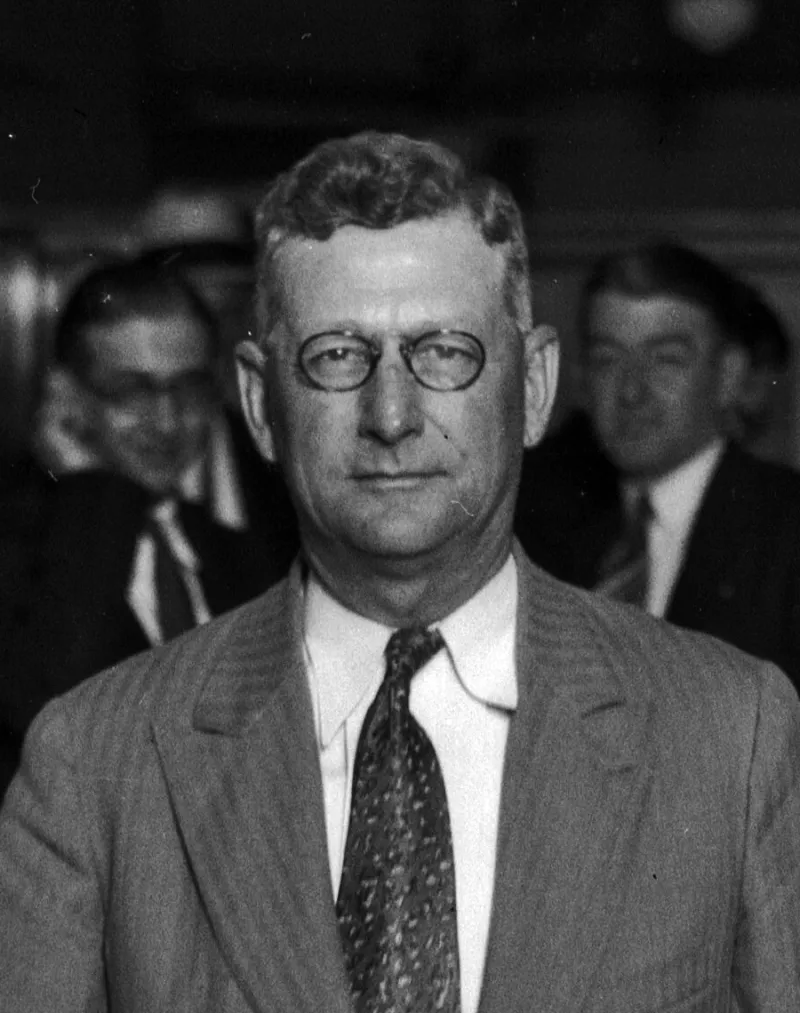
Photo: Sandstein, CC BY 3.0, via Wikimedia Commons
The interrogation room is a carefully engineered environment. The chair is uncomfortable. The lighting is harsh. The door, though unlocked, feels permanent. And the detective sitting across the table has been trained in techniques designed to produce one outcome above all others: a confession. What law enforcement agencies across the country have been slower to reckon with is the uncomfortable reality that those same techniques — applied with precision and conviction — are capable of extracting admissions of guilt from people who are entirely innocent.
According to data compiled by the National Registry of Exonerations, false confessions have contributed to approximately 29 percent of all wrongful convictions later overturned through DNA evidence. That figure is not a statistical anomaly. It is a systemic indictment.
The Architecture of a Broken Technique
At the center of this crisis is a method developed in the mid-twentieth century and still widely practiced today: the Reid Technique. Developed by John E. Reid, a Chicago-based polygraph examiner, the approach is built on a foundation of behavioral analysis and psychological manipulation. Interrogators are trained to project certainty about a suspect's guilt before questioning has meaningfully begun, to minimize the moral weight of the alleged crime, and to offer implicit promises of leniency in exchange for cooperation.
The technique is effective at producing confessions. The problem, as forensic psychologists have documented extensively, is that it is not reliably effective at producing true ones.
Dr. Saul Kassin, a distinguished professor of psychology at John Jay College of Criminal Justice and one of the foremost researchers in this field, has spent decades studying how ordinary people can be brought to confess to extraordinary acts they did not commit. His research identifies three primary categories of false confession: voluntary, where individuals come forward without pressure; compliant, where suspects confess to escape an unbearable situation while privately knowing they are innocent; and internalized, where the interrogation itself causes the suspect to genuinely begin to doubt their own memory.
That final category is perhaps the most disturbing. The idea that a skilled interrogator can alter a person's perception of their own past — not through physical coercion, but through sustained psychological pressure — challenges foundational assumptions about the reliability of human memory and the integrity of the justice system.
Case Study: The Central Park Five and the Anatomy of Collapse
No modern American case illustrates the mechanics of false confessions more vividly than the 1989 wrongful convictions of five teenagers from Harlem — Korey Wise, Raymond Santana, Kevin Richardson, Antron McCray, and Yusef Salaam — in connection with the brutal assault of a jogger in Central Park.
Each of the five eventually provided statements implicating themselves and the others. Each later recanted. In 2002, convicted serial rapist Matias Reyes confessed to the crime, and DNA evidence confirmed his account. The five had spent years in prison for an attack they did not commit.
What the interrogation tapes reveal is a process of gradual erosion. The teenagers — ranging in age from fourteen to sixteen — were questioned for hours without parents present for significant portions of the process, were fed details about the crime by interrogators, and were told, repeatedly, that cooperation would result in their going home. They were tired, frightened, and alone in an institutional environment designed to project authority and inevitability. Their confessions were the result not of guilt, but of collapse.
Vulnerability as a Liability
The research is unambiguous on one point: certain populations are significantly more susceptible to producing false confessions. Juveniles, individuals with intellectual disabilities, people experiencing mental health crises, and those with limited education or prior exposure to the legal system are all at elevated risk.
A 2021 study published in the journal Law and Human Behavior found that adolescents were substantially more likely than adults to comply with interrogators' suggestions, even when those suggestions contradicted the adolescents' own stated recollections. The developing brain's heightened sensitivity to social pressure and authority figures — traits that are adaptive in most contexts — become acute liabilities in a high-stakes interrogation setting.
The case of Brendan Dassey, whose confession was central to the Netflix documentary Making a Murderer, brought this vulnerability into sharp public focus. Dassey, who has a below-average IQ and was sixteen at the time of his interrogation, was questioned without a parent or attorney present for much of the process. His statements shifted dramatically in response to interrogators' suggestions, and he repeatedly sought confirmation that his cooperation would allow him to return to school. Courts have remained divided on whether his confession was coerced, and he remains incarcerated — a fact that continues to generate significant legal and ethical debate.
The Legal Framework That Permits the Problem
Perhaps the most alarming dimension of this issue is how thoroughly legal doctrine has accommodated interrogation practices that produce false confessions. The Supreme Court's 1966 ruling in Miranda v. Arizona established the right to counsel and the right to remain silent, but subsequent decisions have significantly narrowed the practical force of those protections.
In Berghuis v. Thompkins (2010), the Court held that a suspect must explicitly invoke the right to silence — simply remaining quiet for hours of questioning is not sufficient. Law enforcement may also legally deceive suspects during interrogation, including by falsely claiming that physical evidence implicates them, a practice that research has directly linked to increased rates of false confession.
The gap between constitutional protection as articulated and constitutional protection as experienced is, for many defendants, the width of a prison cell.
A Path Toward Reform
The good news — and it is genuinely good news — is that the tools for meaningful reform are not speculative. They exist, have been tested, and have demonstrated results.
Mandatory electronic recording of all custodial interrogations, from the moment a suspect is brought into the room, is the most consistently endorsed reform among researchers, defense attorneys, and an increasing number of law enforcement officials. Recording creates accountability. It prevents disputed accounts of what was said and under what conditions. Several states, including Illinois and Wisconsin, have enacted recording requirements, and the evidence suggests these measures improve the quality of investigations without impeding legitimate law enforcement work.
Alternative interrogation frameworks — most notably the PEACE model developed in the United Kingdom, which emphasizes information-gathering over confession-extraction — have shown promise in reducing both false confessions and wrongful convictions while maintaining investigative effectiveness.
Training reforms at the academy level, incorporating the substantial body of psychological research on memory, suggestibility, and coercion, represent another critical lever. Detectives who understand why the techniques they are using can produce unreliable results are better positioned to interrogate in ways that serve justice rather than merely closing cases.
Justice Deferred Is Justice Denied
For the men and women who have served years — sometimes decades — for crimes they did not commit, the reform conversation arrives late. The wrongful conviction system in America has exacted an incalculable human cost, measured not only in years of freedom lost but in families fractured, careers destroyed, and psychological damage that does not resolve upon release.
The confession remains among the most powerful instruments in a prosecutor's arsenal. Juries trust it with a conviction that often outstrips the evidence surrounding it. Reforming the conditions under which confessions are obtained is not, therefore, a matter of giving criminals an easier path. It is a matter of ensuring that the instrument itself is reliable — that when a person says, in that uncomfortable room under that harsh light, I did this, those words reflect the truth rather than the breaking point of a human being under unbearable pressure.
The criminal justice system is only as credible as its most vulnerable moment. Right now, that moment happens far too often in an interrogation room.