Guilty Until Proven Guilty: The Hidden Machinery of America's Plea Bargain System
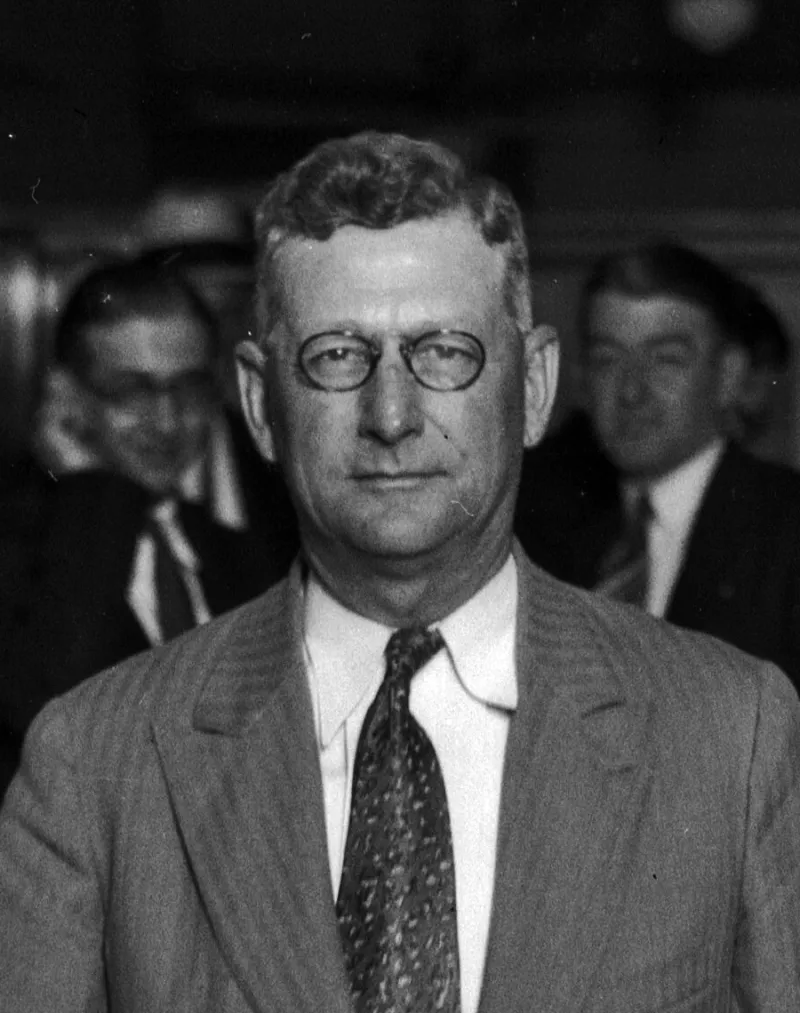
Photo: Los Angeles Times, CC BY 4.0, via Wikimedia Commons
The American courtroom — with its solemn oaths, cross-examinations, and jury deliberations — occupies a central place in the national imagination. It is the arena where guilt is tested and innocence defended. Yet for the vast majority of people caught in the criminal justice system, that arena remains permanently out of reach. According to data from the Bureau of Justice Statistics, approximately 95 percent of state-level felony convictions and 97 percent of federal convictions are resolved through plea agreements. The trial by jury, enshrined in the Sixth Amendment, has become a constitutional relic for most defendants.
This is the machinery of modern American criminal justice: a system that processes hundreds of thousands of cases each year not through open adversarial proceedings, but through private negotiations conducted between prosecutors and defense attorneys — often in courthouse hallways, over the phone, or in hurried meetings that last no longer than a few minutes.
The Architecture of Pressure
To understand how plea bargaining functions in practice, it is necessary to understand what defendants are actually choosing between. When a prosecutor offers a plea deal, the alternative is almost always a trial — and trials carry enormous risk for defendants, particularly those who cannot afford private legal representation.
"The system is designed to make trial feel like a gamble no rational person would take," said one public defender with more than fifteen years of experience in a large urban court system, who spoke on condition of anonymity to protect ongoing client relationships. "My clients are looking at a two-year plea offer on one side, and a potential fifteen-year sentence if they go to trial and lose on the other. Even innocent people do the math."
This phenomenon — in which defendants accept punishment for crimes they did not commit rather than risk the uncertainty of trial — has a name among legal scholars: the innocence problem. Research published by the National Registry of Exonerations has documented hundreds of cases in which individuals pleaded guilty to crimes they did not commit, frequently citing fear of harsher sentences, distrust of the jury system, or the advice of overwhelmed court-appointed attorneys.
Among those exonerees is Marcus Shorter, a Detroit man who in 2004 pleaded no contest to an aggravated assault charge he maintained was fabricated by a neighbor with whom he had a dispute. Facing a potential four-year sentence at trial, Shorter accepted a deal that placed him on probation. The conviction cost him his job, his apartment, and eventually his parental rights. He was formally exonerated in 2019 after surveillance footage surfaced that placed him miles from the scene. "My lawyer told me to take the deal and move on," Shorter recalled in a 2021 interview with a Michigan legal advocacy organization. "Nobody told me what that conviction was going to take from me."
Resource Disparities and the Public Defender Crisis
The structural inequities embedded in the plea bargaining system are amplified dramatically by the chronic underfunding of public defense. A 2019 report from the American Bar Association found that public defenders in many jurisdictions carry caseloads three to five times higher than professional standards recommend. In some counties, attorneys handling misdemeanor cases may be responsible for more than a thousand clients simultaneously.
Under those conditions, the time available for individualized case investigation, witness interviews, or evidence review is negligible. Prosecutors, by contrast, typically have access to law enforcement agencies, forensic laboratories, and investigative resources that no public defender's office can match. The negotiating table, in other words, is rarely level.
"When you have thirty minutes to meet with a client before their arraignment, you are not building a defense," said a former public defender who now teaches criminal procedure at a Midwestern law school. "You are managing a volume problem. And the easiest way to manage volume is to move cases through pleas."
Privately retained defense attorneys, while not immune to advising guilty pleas, operate under fundamentally different conditions. Their caseloads are smaller, their investigative resources are greater, and their clients — by definition — have the financial means to sustain a prolonged legal battle. The result is a two-tiered system in which the quality of justice a defendant receives correlates closely with the size of their bank account.
What Disappears When Trials Disappear
Beyond the individual consequences for defendants, the mass migration of criminal cases away from courtrooms carries broader implications for the justice system itself.
Trials produce public records. They generate testimony, evidence rulings, and appellate decisions that shape legal precedent. They expose investigative misconduct, unreliable witnesses, and forensic overreach to scrutiny. Plea deals, by contrast, are largely opaque. The terms of most agreements are never publicly disclosed. The evidence that would have been presented at trial is never tested. The witnesses who would have been cross-examined never take the stand.
"We have essentially privatized the adjudication of criminal guilt," said a former federal prosecutor now in private practice. "And when you privatize something, you lose accountability. You lose the ability to see whether the system is working correctly."
This accountability gap extends to law enforcement as well. When cases are resolved through plea agreements, the investigative methods used to build those cases rarely face judicial examination. Questionable eyewitness identifications, coerced confessions, and forensic evidence of dubious reliability all disappear into the record of a guilty plea — with no mechanism for review.
Reform Efforts and Their Limits
A growing coalition of defense attorneys, legal scholars, and criminal justice reform organizations has begun pushing for structural changes to the plea bargaining system. Proposed reforms range from mandatory recording of plea negotiations to limitations on the sentencing differential between plea offers and trial outcomes — the so-called "trial penalty" that critics argue coerces defendants into forgoing their constitutional rights.
Some jurisdictions have experimented with expanded pretrial disclosure requirements, compelling prosecutors to share more of their evidence before negotiations begin. Others have introduced conviction integrity units tasked with reviewing cases where post-conviction evidence raises doubts about guilt.
Yet meaningful reform has proven elusive. Prosecutors and court administrators frequently argue that without plea bargaining, the criminal justice system would collapse under the weight of its own caseload. The volume of criminal cases filed annually in the United States is simply incompatible, they contend, with a system that resolves each one through a full trial.
That argument, critics respond, reveals the deeper problem. A system so overburdened that it cannot afford to actually adjudicate guilt is not a justice system in any meaningful sense of the term.
The Verdict That Was Never Rendered
For Marcus Shorter and the thousands of others whose stories populate the National Registry of Exonerations, the plea bargain was not a shortcut to justice. It was a trap — one baited with the promise of certainty and sprung by the fear of something worse.
The courtroom drama that Americans associate with criminal justice — the opening arguments, the witness examinations, the jury's deliberation — plays out in a vanishingly small fraction of cases. For the rest, justice is whatever can be negotiated in the time available, by the attorneys who happen to be assigned, with the resources that happen to exist.
Until the structural conditions that produce that reality are honestly confronted, the gap between the justice system Americans believe they have and the one that actually operates will continue to widen — one guilty plea at a time.