Swipe Right on Justice: When TikTok Goes Cold Case

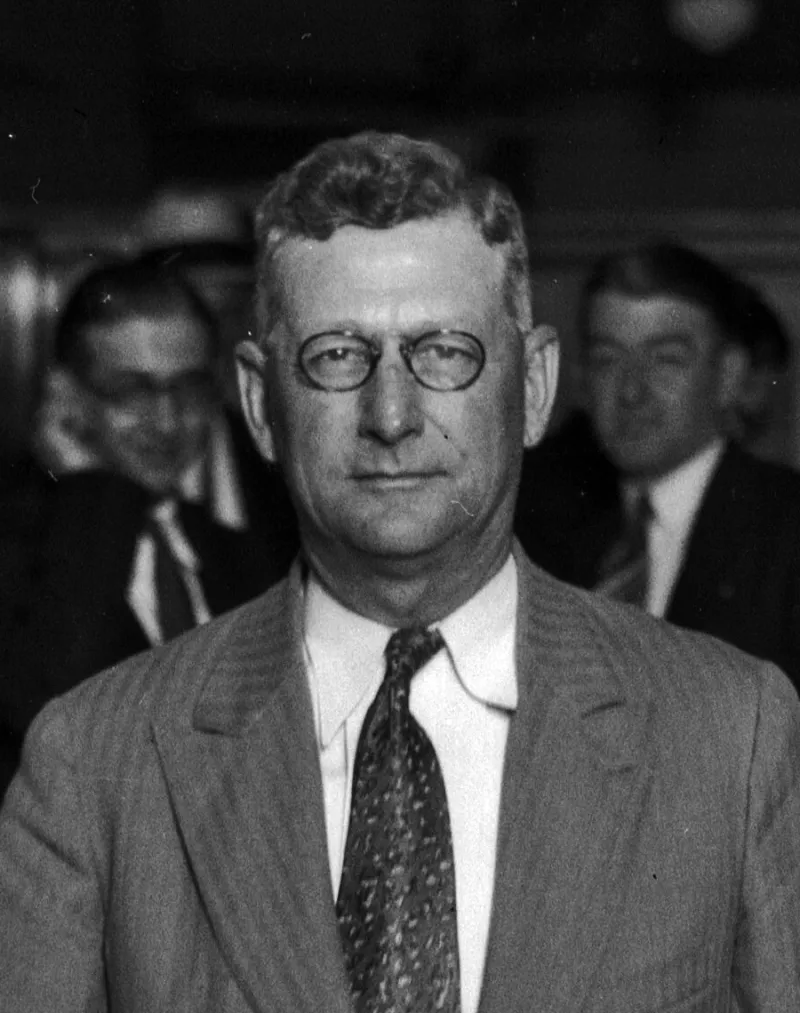
Photo: Dennis Sylvester Hurd, Public domain, via Wikimedia Commons
Somewhere between a ring light and a ring camera, a new kind of investigator has emerged. They do not carry badges. They have no subpoena power. Many of them are college students, stay-at-home parents, or retirees posting from spare bedrooms in suburban America. Yet in an increasing number of documented cases, these amateur online sleuths — operating primarily through TikTok, Reddit, and Facebook groups — have surfaced leads, identified suspects, and applied enough public pressure to reopen investigations that professional law enforcement had quietly shelved.
The phenomenon raises questions that are simultaneously thrilling and deeply uncomfortable. When crowdsourced curiosity actually works, who deserves the credit? And when it goes wrong — as it sometimes does, catastrophically — who bears the cost?
The Cold Case Problem
To understand why amateur investigators have found such fertile ground, it helps to understand the scale of the problem they are working against. The FBI's Uniform Crime Reporting data consistently shows that homicide clearance rates in the United States have declined sharply over the past several decades, falling from roughly 90 percent in the 1960s to approximately 50 percent in recent years. In major metropolitan areas, that figure is frequently lower.
The result is a national backlog of unsolved murders numbering in the hundreds of thousands. Many of those cases — particularly those involving victims from low-income communities or marginalized populations — receive limited investigative resources once initial leads go cold. Detectives are reassigned. Witnesses move or die. Evidence degrades. Files get archived.
Into that vacuum, the internet has poured an enormous reservoir of motivated human attention.
When the Algorithm Meets the Evidence Room
The case of Lori Erica Ruff, known for years only as "Lori Erica Kennedy" after she assumed a stolen identity in the 1980s, is among the most cited examples of online communities contributing to a genuine investigative breakthrough. After her death in 2010, amateur genealogists and internet researchers collaborated over several years to piece together her true identity — work that professional investigators had been unable to complete. The case attracted sustained attention on Reddit's r/UnresolvedMysteries forum, where users pooled documentary research, cemetery records, and social media archaeology to eventually establish her origins.
More recently, TikTok has become the dominant platform for a genre of true crime content that blurs the line between entertainment and investigation. Creators with follower counts in the hundreds of thousands regularly produce multi-part series on cold cases, presenting evidence timelines, interviewing peripheral witnesses on camera, and soliciting tips from their audiences through comment sections and direct messages.
In several instances, that approach has produced tangible results. Law enforcement agencies in at least a handful of states have publicly acknowledged receiving tips through social media platforms that contributed to reopened investigations. A sheriff's department in rural Georgia credited an online community's research into a 1990s missing persons case with identifying a previously unknown witness who ultimately provided investigators with new physical evidence.
"We would be foolish to pretend that the public doesn't sometimes know things we don't," said one active-duty detective with experience in cold case investigations, who agreed to speak generally about the phenomenon without commenting on specific cases. "The question is always how to use that information responsibly without compromising what we're trying to do."
The Dangerous Side of Viral Justice
For every success story, however, there are cautionary examples that deserve equal scrutiny — and this publication's commitment to honest analysis demands they be examined alongside the wins.
The most serious risk of amateur online investigation is misidentification. True crime communities have on multiple occasions publicly named individuals as suspects based on circumstantial reasoning, superficial physical resemblance, or geographic proximity to a crime — with devastating consequences for the people targeted. In several documented cases, private individuals have received death threats, lost employment, and been forced to relocate after being incorrectly identified by online communities as perpetrators of violent crimes.
The 2013 Boston Marathon bombing aftermath remains the most widely cited example of crowdsourced investigation producing catastrophic misidentification. Reddit communities, operating with genuine conviction and some surface-level analytical rigor, publicly identified multiple innocent individuals as bombing suspects. The damage to those individuals' lives was immediate and lasting.
More recently, TikTok's true crime ecosystem has produced its own misidentification episodes, some involving cases that remain under active investigation. Creators, motivated in part by the engagement mechanics of the platform — which reward dramatic revelations and narrative tension — sometimes present speculative conclusions with a confidence that their evidence does not support.
"The problem is the format," observed a media critic who has written extensively on true crime's cultural footprint. "TikTok rewards certainty. It rewards the moment of revelation. It doesn't reward 'we looked into this and we're not sure.' That incentive structure is fundamentally incompatible with responsible investigation."
Law Enforcement's Complicated Relationship with the Crowd
Police departments and prosecutors across the country are navigating a genuinely novel challenge: how to engage with a public that is increasingly informed, occasionally useful, and sometimes actively harmful to ongoing investigations.
Some agencies have adopted formal mechanisms for receiving and processing public tips generated through social media, recognizing that ignoring the phenomenon is neither practical nor strategically sound. Others have issued public statements urging online communities to share information directly with investigators rather than broadcasting it, citing the risk that public speculation can compromise witness testimony or alert suspects.
The tension is real. Information shared publicly on TikTok or Reddit is, by definition, no longer controlled. A detail that might have led investigators to a suspect can just as easily lead the suspect to destroy evidence or flee. A witness who might have spoken candidly to a detective may become guarded after seeing their name mentioned in a viral video.
"There's a version of this where the public helps us," the detective acknowledged. "And there's a version where they burn the case down before we can make an arrest. Both versions happen."
Accountability in the Age of the Algorithm
The deeper question raised by the true crime TikTok phenomenon is one of accountability — and it does not have a clean answer.
Professional journalists who investigate cold cases operate within legal and ethical frameworks, however imperfect. They can be held responsible for defamatory content. They are bound by editorial standards. Their work is subject to institutional review.
A 22-year-old with a ring light and 400,000 followers operates under no equivalent constraints. The platform itself provides minimal guardrails for content that names private individuals as suspects in violent crimes. Viral reach, once achieved, cannot be recalled.
This is not an argument against citizen engagement with cold cases. The historical record is clear that public attention has, in documented instances, delivered justice to victims whose cases the formal system had abandoned. That is a meaningful contribution, and it deserves recognition.
But justice — real justice, the kind that holds up in a courtroom and does not destroy innocent lives along the way — requires more than engagement. It requires rigor, restraint, and an honest reckoning with the limits of what any individual, credentialed or otherwise, can responsibly conclude from a comment section and a genealogy website.
The cold cases are real. The victims are real. The question worth asking, as the algorithm serves up another installment, is whether the format we have chosen to pursue them is equal to the weight of what is actually at stake.