Signed in Silence: The Coercion Epidemic Plaguing Small-Town Police Interrogation Rooms
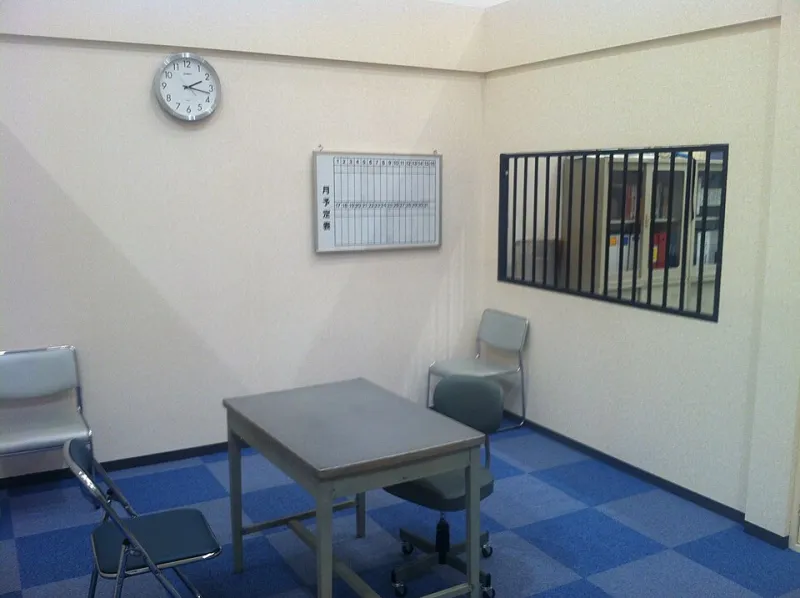
Photo: nesnad, CC BY 3.0, via Wikimedia Commons
The interrogation room in a small county sheriff's office rarely resembles the sleek, camera-equipped chambers depicted in prestige crime dramas. More often, it is a repurposed storage space, a converted conference room, or a windowless office with a folding table and two mismatched chairs. What happens inside those rooms, however, can carry consequences as severe as anything produced by the most sophisticated urban law enforcement apparatus in the country.
In communities stretching from the Appalachian foothills to the agricultural flatlands of the Midwest, a troubling pattern has emerged — one that researchers, defense attorneys, and civil liberties advocates have documented with increasing urgency over the past two decades. Suspects who are cognitively impaired, mentally ill, experiencing acute substance withdrawal, or simply terrified and alone are being guided, pressured, and in some cases psychologically manipulated into signing confessions that do not reflect reality. The consequences for those individuals are frequently catastrophic. For the communities that trust these departments to pursue actual perpetrators, the consequences are equally serious, if less immediately visible.
The Architecture of a Coerced Confession
False confessions are not, as many assume, the product of dramatic physical abuse or theatrical intimidation. The modern mechanics of coercion are considerably more subtle — and considerably more effective. Researchers at the Innocence Project and academic institutions including Northwestern University's Center on Wrongful Convictions have catalogued the specific conditions under which innocent people are most likely to admit to crimes they did not commit.
Sleep deprivation, prolonged isolation, and the deliberate minimization of consequences — a technique in which investigators suggest that confessing will result in leniency — are among the most reliably documented contributors. So is the presentation of false evidence, a practice that remains entirely legal in the United States. An investigator may inform a suspect that their fingerprints were found at the scene, that a witness identified them, or that a co-conspirator has already implicated them — none of which need be true. For a suspect with an intellectual disability, a psychotic disorder, or a compromised capacity for long-term reasoning, these fabrications can be insurmountable.
Small-town departments face a particular set of structural pressures that amplify these risks. Limited budgets restrict access to properly trained interrogators. Understaffing means investigations are under-resourced and under scrutiny. Community pressure — the expectation that a local crime will be solved quickly and visibly — can create an environment in which a confession, any confession, becomes the path of least resistance.
Case by Case: The Human Cost
The story of Eddie Lowery is instructive. Lowery, a Kansas man with no prior criminal record, confessed in 1981 to a rape he did not commit after a lengthy interrogation. He served a decade in prison before DNA evidence established his innocence. What made Lowery's case particularly instructive to researchers was his own testimony about the interrogation process: he had come to believe, by the end of those hours in a small-town police station, that confessing was the only way the questioning would stop.
Lowery's experience is not an isolated historical artifact. The National Registry of Exonerations, maintained by the University of Michigan Law School, documents hundreds of cases in which false confessions contributed to wrongful convictions. A disproportionate number of those cases involve defendants with documented intellectual disabilities or serious mental illness. A disproportionate number also originated outside major metropolitan areas, where the absence of robust public defender offices and legal aid organizations leaves suspects profoundly exposed during the most critical hours of a criminal investigation.
In one recent case from a rural Tennessee county, a man with a diagnosed intellectual disability — functioning at roughly the cognitive level of an eleven-year-old — was questioned for more than six hours without an attorney present. The resulting confession contained factual errors about the crime that investigators never corrected before presenting the document as evidence. It took three years and the intervention of a nonprofit legal organization to secure his release.
Why Legal Protections Fall Short
The constitutional framework that ostensibly governs police interrogations was constructed on assumptions that do not hold uniformly across the population. The Miranda warning — the familiar recitation of rights that precedes custodial questioning — presupposes that the person receiving it comprehends its meaning and possesses the psychological and cognitive capacity to invoke those rights meaningfully.
Research consistently demonstrates that a significant percentage of individuals with intellectual disabilities do not understand that they are entitled to refuse to answer questions, or that requesting an attorney will not be interpreted by investigators as evidence of guilt. For individuals experiencing active psychotic symptoms or severe anxiety disorders, the calculus is similarly distorted. The warning is recited; the waiver is signed; the interrogation proceeds. The legal formality of the process obscures its practical inadequacy.
The Supreme Court's 2010 decision in Berghuis v. Thompkins further complicated the landscape by holding that a suspect must explicitly and unambiguously invoke the right to remain silent — a burden that falls with particular cruelty on those least equipped to navigate it.
The Persistence of Discredited Methods
The dominant interrogation framework used in American law enforcement for much of the past half-century — the Reid Technique, developed in the 1950s — has been subjected to sustained and credible criticism from the scientific community. Studies published in peer-reviewed journals have repeatedly demonstrated that the behavioral cues the technique trains investigators to identify as indicators of deception are no more reliable than chance. The technique's presumption of guilt and its reliance on psychological pressure have been specifically linked to elevated rates of false confession.
Despite this, many small and mid-sized departments continue to train officers in Reid-based methods, in part because alternative frameworks — such as the PEACE model developed in the United Kingdom, which emphasizes information-gathering over confession-extraction — require more extensive training and institutional commitment than resource-constrained departments can readily provide.
The result is a self-reinforcing cycle. Departments with limited resources adopt cheaper, less sophisticated interrogation approaches. Those approaches produce confessions that close cases without requiring the additional investigative work that might establish guilt more rigorously. Closed cases reduce pressure on the department. The underlying methodology is never seriously examined.
Toward Accountability
A growing coalition of researchers, legal advocates, and reform-minded law enforcement professionals has begun to press for structural changes — mandatory electronic recording of all custodial interrogations, independent oversight of interrogation practices in departments below a certain size, and the routine presence of trained advocates when suspects with documented cognitive or psychiatric vulnerabilities are questioned.
Some states have moved incrementally in this direction. Illinois, for instance, requires the electronic recording of interrogations in homicide cases. A smaller number of jurisdictions have extended that requirement more broadly. But in most of rural America, the interrogation room remains a largely unmonitored space where the power differential between investigator and suspect is absolute — and where the consequences of that imbalance fall most heavily on those who can least afford to bear them.
The confessions keep coming. The cases keep closing. And in county courthouses across the country, innocent people continue to plead guilty to crimes they did not commit, because the alternative — navigating a legal system without adequate representation against the full institutional weight of local law enforcement — is a risk too many cannot afford to take.