The Confession Belt: Mapping the American Jurisdictions Where Interrogation Rooms Function as Guilt Factories
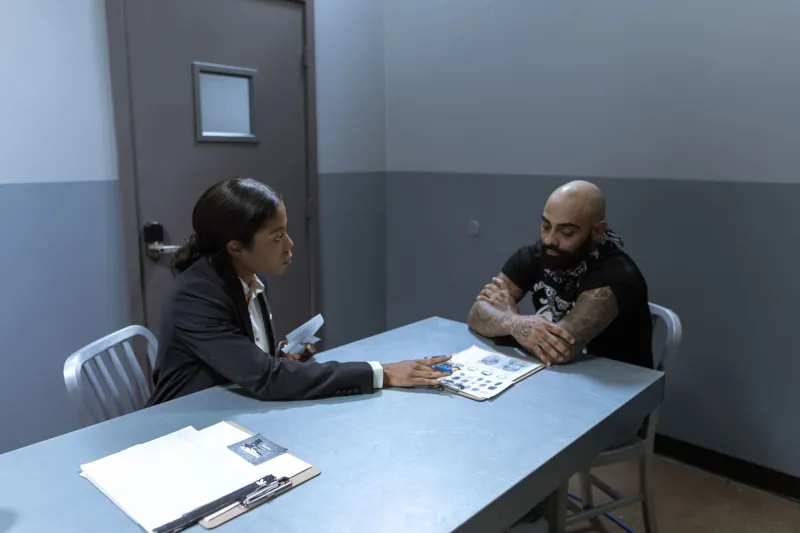
A confession is the most powerful instrument in a prosecutor's arsenal. Juries trust them. Judges rarely suppress them. Defense attorneys dread them. And in certain corners of American law enforcement, they are extracted with a consistency that statistics alone should find alarming.
Criminal Class Press reviewed publicly available exoneration data from the National Registry of Exonerations, cross-referenced with confession-related wrongful conviction cases documented by the Innocence Project and affiliated organizations, and identified a pattern that is difficult to explain through any lens other than institutional interrogation abuse. Specific departments—concentrated but not exclusive to the Midwest and parts of the rural South—appear repeatedly in false confession cases, often connected to the same investigators, the same training lineages, and the same procedural environments.
The Numbers That Don't Add Up
Nationally, false confessions are implicated in roughly 29 percent of DNA exoneration cases, according to Innocence Project data. That figure alone is staggering—nearly three in ten people exonerated by DNA evidence had previously confessed to crimes they did not commit. But the aggregate national figure obscures something more troubling: the distribution is not random.
When researchers at the University of Michigan Law School's National Registry analyzed confession-linked exonerations by county and jurisdiction, clustering became apparent. Certain jurisdictions produced multiple false confession exonerations within relatively short windows. Some of those cases involved the same detectives. Others involved departments that had received training from the same private interrogation consulting firms—companies that, until recently, marketed techniques now widely discredited by cognitive psychologists and legal scholars.
The Reid Technique, the dominant interrogation methodology taught to American law enforcement for decades, is premised on a detective's ability to detect deception through behavioral cues and then apply psychological pressure to overcome a suspect's resistance to confessing. The scientific literature on both premises is deeply unfavorable. Trained interrogators perform no better than chance at detecting lies, and the confrontational pressure tactics the method prescribes are well-documented contributors to false admissions—particularly in vulnerable populations including juveniles, people with intellectual disabilities, and individuals subjected to prolonged sleep deprivation.
A Portrait of Institutional Practice
In Dixmoor, Illinois—a small village south of Chicago—five teenagers confessed in 1991 to the rape and murder of a fourteen-year-old girl. All five were convicted. DNA testing conducted years later excluded all of them and identified a different individual as the perpetrator. The Dixmoor Five were exonerated between 2011 and 2012, after spending years in prison for a crime the evidence ultimately proved they did not commit.
The interrogations that produced those confessions shared features that experts in false confession research now recognize as high-risk: juveniles questioned without adequate parental presence, extended interrogation sessions, and the presentation of false evidence—a technique that remains entirely legal under American law despite its documented capacity to induce false admissions.
The Dixmoor case is not isolated. The wrongful convictions associated with former Chicago Police Commander Jon Burge, who oversaw a systematic torture program that extracted confessions from more than a hundred Black men between the 1970s and 1990s, represent perhaps the most extensively documented example of institutionalized interrogation abuse in American history. Burge was convicted of perjury and obstruction in 2010. The city of Chicago has paid more than $100 million in settlements related to his unit's conduct.
The Trainer Problem
One underexamined dimension of the false confession epidemic is the role played by private interrogation training companies. Law enforcement agencies across the country contract with these firms to train detectives in interrogation methodology. Until relatively recently, many of those firms marketed techniques—prolonged isolation, false evidence presentation, minimization strategies that suggest leniency in exchange for admission—that create documented false confession risk.
Because law enforcement training is largely unregulated at the federal level and inconsistently regulated by states, these companies operated for decades without meaningful accountability for the downstream consequences of the methods they sold. When a detective trained by a particular firm extracts a false confession that leads to a wrongful conviction, the causal chain connecting that outcome to the training itself is rarely examined in any official proceeding.
"The training industry has functioned as an insulation layer," said one criminal defense attorney who has litigated multiple false confession cases. "The department says it followed its training. The training company says it taught best practices. Nobody is accountable for the person sitting in a cell for something they didn't do."
Sleep Deprivation and the Temporal Architecture of Interrogation
Among the most reliably coercive elements of interrogation practice is the manipulation of time. Suspects who are held for questioning in the early morning hours—after a night without sleep, following hours of isolation—demonstrate measurably impaired decision-making capacity. Research published in the Journal of Experimental Psychology found that sleep-deprived individuals were significantly more likely to sign false confession statements than rested counterparts under otherwise identical conditions.
Despite this well-established finding, American law places no statutory limit on interrogation duration in most jurisdictions. The constitutional prohibition on involuntary confessions, as interpreted through decades of Supreme Court precedent following Miranda v. Arizona, focuses on the totality of circumstances—a flexible standard that has proven permissive enough to accommodate interrogations lasting well into double-digit hours.
Records obtained through public records requests in several jurisdictions examined for this article revealed interrogation logs documenting sessions extending beyond twelve hours, with suspects who had been in custody since the previous evening. In several of those cases, the resulting confessions became the centerpiece of successful prosecutions. In a smaller subset, subsequent exonerations identified the confessions as false.
Clearance Rates as Perverse Incentives
Law enforcement agencies in the United States are evaluated, publicly and internally, in significant part by clearance rates—the percentage of reported crimes that result in an arrest. The FBI publishes annual clearance data. Local politicians cite it. Police chiefs' tenures are influenced by it. And in departments where investigative resources are thin and violent crime rates are high, the pressure to close cases creates conditions in which the speed and certainty of a confession can override the scrutiny it warrants.
This incentive structure does not require bad faith to produce bad outcomes. A detective who genuinely believes a suspect is guilty, who has been trained in techniques that legal authority permits, and who operates in an institutional environment that rewards closed cases has every structural reason to push hard for a confession—and limited structural reason to question whether the admission is genuine.
The jurisdictions that appear most frequently in false confession exoneration data are not uniformly characterized by malice. They are characterized by pressure, inadequate oversight, legally permissive interrogation environments, and training methodologies that have not kept pace with the science. The result, documented in case file after case file, is a confession belt—a geography of admission where the truth of what happened in a room matters considerably less than the paperwork that comes out of it.